|
Smart Structures and Systems Volume 37, Number 6, June 2026 |
|
Obituary
|
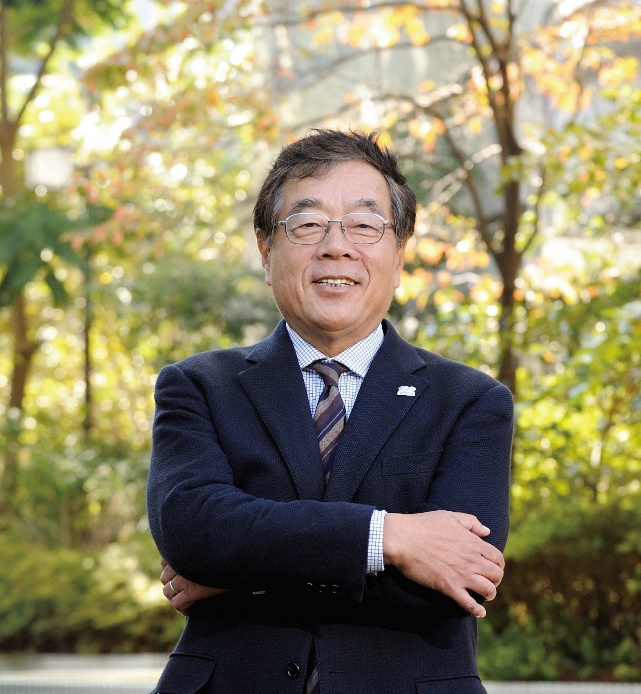 In Memoriam: Professor Yozo Fujino (1949–2026)Professor Yozo Fujino, one of the world's leading figures in structural dynamics, structural control, bridge engineering, and structural health monitoring, passed away on June 6, 2026, at 9:37 p.m. Japan Standard Time in Tokyo, Japan. His passing is a great loss to the international civil engineering community and to the many colleagues, students, and friends shaped by his scholarship, leadership, and generosity. Born in Tokyo on September 27, 1949, Professor Fujino earned his Bachelor's and Master's degrees in Civil Engineering from the University of Tokyo in 1972 and 1974, respectively, followed by a Ph.D. from the University of Waterloo in 1976. After returning to Japan, he held appointments at the Earthquake Research Institute of the University of Tokyo and the Institute of Structural Engineering at the University of Tsukuba. In 1990, he was appointed Professor in the Department of Civil Engineering at the University of Tokyo, where he built an internationally recognized research group in bridge dynamics, vibration control, and monitoring. In 2014, he joined Yokohama National University as Distinguished Professor in the Institute of Advanced Sciences. He later served as President, and subsequently Chairman, of Josai University. He was Professor Emeritus of both the University of Tokyo and Yokohama National University. Professor Fujino's research helped transform how engineers understand, model, monitor, and control the behavior of large civil structures. His work was especially influential in the dynamics of long-span bridges subjected to wind, earthquake, traffic, and human-induced loading. Long before the widely publicized vibration problems of London's Millennium Bridge, he had identified and explained pedestrian-induced lateral vibration caused by synchronization of human walking. His research provided a scientific basis for understanding these phenomena and for developing effective mitigation measures. He also made important contributions to the study and control of stay-cable vibration, including damper design approaches that have become part of modern cable-stayed bridge practice. As a pioneer in structural control, Professor Fujino advanced the use of tuned mass dampers, multiple tuned mass dampers, tuned liquid dampers, and seismic isolation systems. His work helped move structural control from an emerging research area toward practical engineering application. He combined analytical clarity with experimental insight and kept a consistent focus on implementation in real structures. As a result, his contributions influenced academic research as well as the design and performance of bridges and buildings internationally. Professor Fujino also recognized early that measurements from operating structures could reveal behavior that models alone could not fully capture. Through field measurements, dense sensor arrays, and long-term monitoring, he helped establish structural health monitoring as a powerful tool for evaluating the condition and performance of large-scale infrastructure. His work contributed to major projects that included the Akashi Kaikyo and Tatara Bridges in Japan, vibration control of the Millennium Bridge in the United Kingdom, the Stonecutters Bridge in Hong Kong, and the Padma Bridge in Bangladesh. Beyond his technical contributions, Professor Fujino played a central role in building the international community in structural control, monitoring, and smart structures technology. He served as President of the International Association for Structural Control and Monitoring, Vice President of the International Association for Bridge and Structural Engineering, and President of the Asia-Pacific Network of Centers for Research in Smart Structures Technology. Together with Professor Chung-Bang Yun of KAIST and Professor Billie F. Spencer Jr. of the University of Illinois Urbana-Champaign, he established the Asia-Pacific Summer School on Smart Structures Technology in 2008. Since its founding, the summer school has welcomed more than 1,000 participants, many of whom have gone on to become leaders in civil engineering, academia, industry, and government. Within Japan, Professor Fujino also contributed to national infrastructure policy, including service as Program Director for the Cabinet Office's Strategic Innovation Promotion Program on infrastructure maintenance, renovation, and management. His achievements were recognized with many of the leading honors in civil and structural engineering. In Japan, these included the Medal with Purple Ribbon in 2007, the Hattori Hoko Award in 2015, and the Japan Academy Prize in 2019 for his contributions to the understanding and control of vibrations in large civil structures. In December 2025, he was elected a Member of the Japan Academy in recognition of his contributions to structural engineering and bridge science. Internationally, his honors included the ASCE Raymond C. Reese Research Prize, the Robert H. Scanlan Medal, the George Winter Award, the Moisseiff Award, and the George W. Housner Structural Control and Monitoring Medal, along with major awards from IABSE, IABMAS, EASEC, and JSCE. Professor Fujino's legacy extends beyond publications, projects, and awards. It resides also in the people he mentored and inspired. He guided generations of students, researchers, and practicing engineers, many of whom now hold leadership positions throughout the world. Those who had the privilege of working with him will remember his intellectual rigor, his broad vision, his commitment to engineering practice, and the warmth and kindness he brought to his collaborations. His wife, Atsuko, recalled that even in his final hours, he was thinking about measurement and discussing the differences between older and newer measurement systems, moving naturally between English and Japanese. He remained a researcher to the very end. Through a lifetime of research, leadership, and mentorship, Professor Yozo Fujino helped shape the modern fields of structural dynamics, structural control, structural health monitoring, and smart structures technology. His influence will endure in the bridges he helped make safer, the scientific communities he helped build, the people he mentored, and the many lives he touched. On behalf of the Editorial Board of Smart Structures and Systems |


